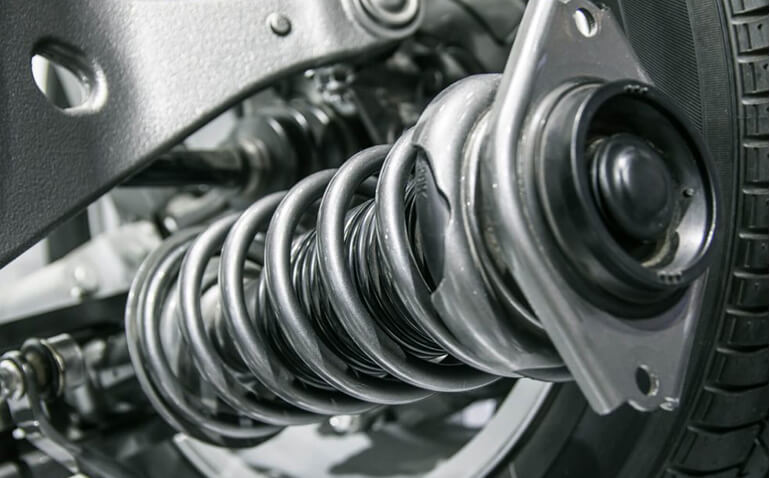

Common car suspension problems include a rough ride, excessive bouncing, pulling to one side, uneven tire wear, and clunking noises over bumps. Other key symptoms are dipping or nose-diving while braking, steering difficulties, and visible oil leaks on shock absorbers. A simple “bounce test” can often detect worn shocks.
Key Symptoms of Suspension Problems
- Rough, Bumpy, or Bouncy Ride: Feeling every bump or experiencing a “bouncy” or “boat-like” ride indicates worn shocks or struts.
- Pulling/Drifting to One Side: The vehicle pulls to the left or right while driving straight, often indicating alignment issues or worn suspension components.
- Nose-Diving or Dipping When Braking: The front end dives down sharply when you apply the brakes, indicating the struts/shocks can no longer support the weight.
- Uneven or Premature Tire Wear: Tires show abnormal wear, such as cupping (scalloped dips), bald spots, or excessive wear on one edge, suggesting the suspension isn’t holding the tires steady.
- Clunking, Squeaking, or Rattling Noises: Unusual noises when going over bumps or turning often indicate worn bushings, ball joints, or broken sway bar links.
- One Corner Sits Lower: The car looks lower on one side or corner when parked, indicating a broken or sagging spring.
- Difficulty Steering: Steering feels loose, shaky, or excessively stiff, particularly at low speeds or while turning, which indicates a link to the power steering and suspension systems.
- Oily/Damaged Shocks or Struts: A visible inspection shows hydraulic fluid leaking from the body of the shock or strut.
Common Self-Diagnosis Test
- The Bounce Test: With the car parked, push down hard on the front corner, release, and observe. If the car bounces more than 2-3 times, the shocks or struts are likely worn out.
If you experience these issues, it is recommended to have a professional inspection, as bad suspension can severely affect braking distance and steering control.

